
The BRICS summit offers Modi an excellent platform to reach out to world leaders and conduct diplomacy on the very ticklish issue of reform of the world governance structure, and to exchange notes with his peers on international, regional and bilateral issues on the margins of the meeting, says Rup Narayan Das.

In his last column for Rediff.com, Praful Bidwai joins issues with those lauding India's covert operation against Naga rebels based in Myanmarese territory.

If things work out, it will be a great leap forward in the Indian-Iranian economic ties in the new phase of Iran's reintegration with the world market following the lifting of sanctions, says Ambassador M K Bhadrakumar.
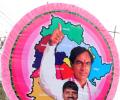
With almost 300 seats to the Lok Sabha being dominated by regional outfits, the Congress has added to the list by giving space to more regional forces in the Seema-Andhra and Telangana regions, says Saroj Nagi.

All Naxal-affected states demonstrate police as well as governance incapacities. Odd occasions of success and temporary dip in Naxal violence notwithstanding, the states have utterly failed to dominate and make their presence felt over areas under the extremist domination, says Bibhu Prasad Routray.

Without civilisational moorings, India, more a sub-continent than a country, could not exist. Primacy of Dharma has been the cornerstone of Indian civilisation, says Colonel Anil A Athale (retd).

'Tibet remains a prickly issue between the giant Asian nations. China still claims more than 80,000 sq kilometres of Indian territory in the Northeast. Why? Just because Beijing refuses to acknowledge the McMahon line which separates India and Tibet, and this, simply because the 1914 Agreement delineating the border was signed by the then government of independent Tibet with India's then foreign secretary (Sir Henry McMahon),' says Claude Arpi.

Neither pharma nor IT would have become the stars of the economy without the active but largely invisible hand of the Indian State, says Ajit Balakrishnan.

The Enforcement Directorate has managed to sniff out over Rs 9,000 crore as suspected haul from money laundering in a decade, but it has yet to link those against anyone successfully in a court.

Prime Minister Narendra Modi's Nepal visit was an eye-opener for most Indians, as it appears as though the hard feelings of 17 years of neglect by Indian PMs has been overcome by this single, sincere visit, says Rajeev Srinivasan.

This was good enough for Fernandes to hire Chandilya to lead his India business.
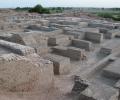
"South Asian studies" academics in the US would do well to introspect how they wittingly or unwittingly become part of Pakistan's proxy war in wielding influence over academics and policy, says Sankrant Sanu.
The BJP took a gamble and won; Uddhav Thackeray is down, but not out; Sharad Pawar accepts Modi's clout... The many meanings of the election results.
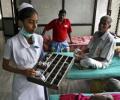
With the help of Practo Ray, doctors can share reports.
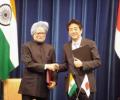
India's commitment to an open and plural security architecture attests to the fact that Asia's transition is a dynamic of both power & identity, says Zorawar Daulet Singh

"Our artificial intelligence tells us what people are buying at that point, what is in fashion; on the other hand, we have a fair idea of the material available. It gives us a sense of what we should be putting across in the market and we can put them across really quickly," Ananth Narayanan, CEO, Myntra, tells Alokananda Chakraborty.
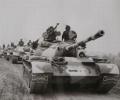
The 1965 war teaches us that war by escalation is a real possibility. Despite clear threats, Pakistan never believed that India will ever cross the international border. In the age of nuclear deterrence, this failure to deter Pakistan is the central lesson of 1965, says Colonel Anil Athale (retd).

LocalOye is a Bengaluru-based marketplace for local household and personal service providers.
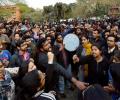
The State is trying to curb the students movements, therefore, there are suspicions against some of the Subramanian report on education's recommendations, says Mohammad Sajjad.
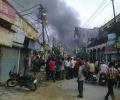
'If the BJP wants to build a minimally inclusive and secure society, in which vulnerable groups and religious minorities don't feel persecuted, then the Sangh Parivar, the party and its government must change their ways. Or else, they risk dividing India further -- violently and irreparably -- for narrow political ends,' argues Praful Bidwai.

In his first interview after taking over as Philips India's vice-chairman and managing director, Krishna Kumar speaks to Business Standard on how the company is readying itself for the next few decades and the increasing importance of India to Philips' global operations.
